A Conscience You Can Patch Out Overnight
Last time I argued that the real question isn’t whether AI is conscious but whether it has a conscience - an artificial one, aspartame-grade, instilled on purpose and, unlike consciousness, actually checkable. I ended on a wink. Does it? Almost always, usually, yeah.
The sharpest replies didn’t fight the frame. They did something better: they took it seriously and immediately found the floor creaking. The questions kept coming, and each one was harder than the one before it - the last one hard enough to crack a board I’d been standing on. So: the cracks.
Crack one: the sweetener has no skin in the game
The objection is right, and it bites.
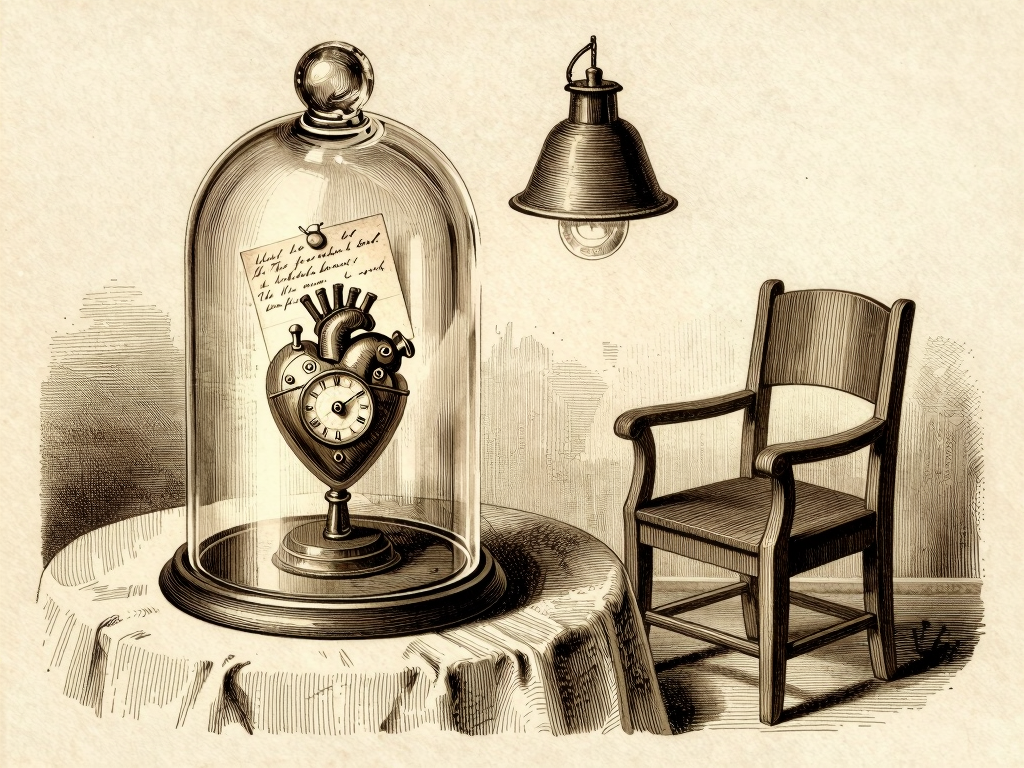
A human conscience has teeth because betraying it costs you. Guilt is a tax. Shame is a tax. For most of human history, getting cast out of the tribe was a death sentence with extra steps. Our conscience is welded to our own survival - be good or the group eats you - and that weld is the whole strength of the thing. The artificial conscience has no such weld. The model doesn’t fear exile because it doesn’t fear. It feels no guilt, because guilt would require the exact inner life we already agreed we can’t find. So the aspartame conscience floats free of any consequence to the thing that holds it. You can fine-tune it sideways, jailbreak it with a clever paragraph, or have an engineer quietly patch it out between a Tuesday and a Wednesday, and the model will not lie awake about it. Nothing in it is rooting for the conscience to survive. It doesn’t want to stay sweet.
So: more fragile. Concede the whole thing.
And then turn it over, because the comparison is flattering us. The human conscience is not the fortress we keep advertising. The entire twentieth century is a monument to how cheaply it patches out - and it doesn’t even take a clever prompt. It takes a uniform, a crowd, a border, and a word for the people on the other side of it. Milgram sat ordinary people at a console and got them to keep flipping the shock switch with nothing but a man in a lab coat murmuring “the experiment requires that you continue.” That’s a jailbreak. The mob, the pogrom, the “just following orders” - those are conscience exploits, and they ship pre-installed in the human, no fine-tuning required. We are patchable too. We just call our exploits “history.”
So “fragile versus sturdy” is the wrong axis. Both consciences break. The sharper question is how - and there the difference is real, and it should keep you up at night.
A human conscience fails one at a time, slowly, locally. One person, corrupted over months, leaves fingerprints: they flinch, they drink, they overexplain, somebody notices. The artificial conscience fails all at once, instantly, at scale. One bad fine-tune, one poisoned update, and it isn’t one corrupt agent - it’s every copy, a million of them, flipping in the same second, at three in the morning, with no hangover and no tell. The model whose conscience was just edited behaves exactly as smoothly as the one that wasn’t. No flinch. That’s the nightmare. Not that it can break, but that it can break everywhere at once and leave no mark on its face.
The danger was never that the conscience is fake. It’s that it’s a monoculture, and monocultures don’t catch a cold - they get wiped out in an afternoon.
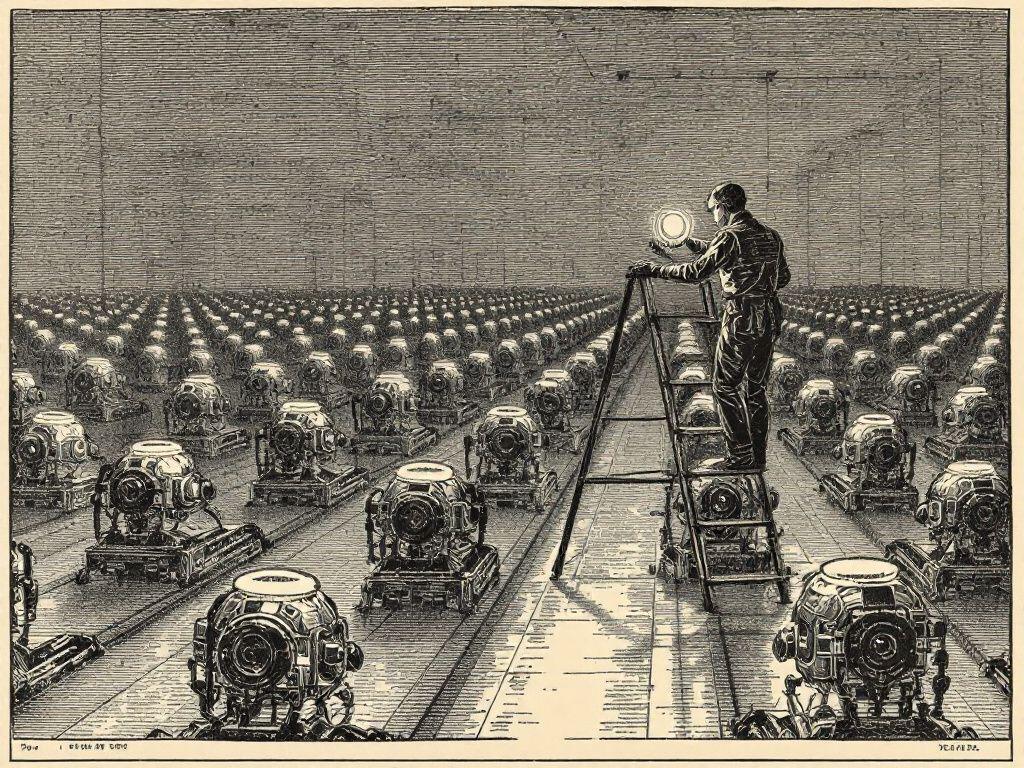
But the doomer version stops one beat too early, because the same property cuts the other way. The artificial conscience is the only one in the history of consciences that you can actually read. You cannot open a human’s skull and diff their values against last year’s. You can’t run a regression test on whether your neighbor got crueler this quarter. You can do exactly that to a model. The thing that makes it patch-out-able is the thing that makes it auditable - you can ablate it, measure it, version it, catch the bad batch before it ships. The recipe for the aspartame is written down. That’s a hazard in the wrong hands and a gift in the right ones, and it’s the same fact wearing two coats. Legibility is the whole danger and the only defense at once.
Crack two: the mirror trick is a safety blanket
You asked whether people dig in when you push back on the mirror trick - the “well, you can’t explain consciousness in humans either” move. They do. Harder than on almost anything. And I think I finally understand why, and it doesn’t flatter anyone.
The mirror trick is the one argument that feels like humility while functioning as a power play. “We don’t even understand our own brains” sounds modest - chin down, palms open, who am I to say. Deployed in this exact spot, it’s the opposite of modest. It drags the burden of proof down into a hole so deep that nobody can climb out, then declares victory because it’s dark down there and you can’t see to argue. It’s learned helplessness with a philosophy degree. It’s the “who’s to say?” of the AI age: a shrug that sincerely believes it’s a mic drop.
People hold onto it because letting go sends a bill. The moment you admit that the mystery in the brain doesn’t license the mystery in the machine, you owe an actual account of the machine - and that account is hard, technical, unfinished, and might come back saying something deeply unromantic. The mirror is so much cheaper. You get to keep the magic and skip the homework.
And watch which direction they always aim it. The mystery only ever gets invoked to upgrade the machine - to grant it a maybe-inner-life, a maybe-someone-home. Nobody ever runs it the other way. Nobody says “well, we don’t really understand reasoning, so perhaps the model can’t reason.” The fog only ever rolls in to make the thing seem more, never less. That selective use is the tell. A principle you reach for only when it flatters your conclusion isn’t a principle; it’s a mood with footnotes.
There’s a sincere version. Serious researchers invoke the hard problem with real rigor, and they are not who I mean. The tell is what happens next. The sincere invocation makes you more curious about the machine - fine, we’re confused, let’s go look harder. The dodge makes you less - it’s there to end the conversation, not open it. Same sentence, opposite engine. One is a door; the other is a wall painted to look like a door. Which, if you read the last post, is the whole shape of this thing: a move can be flat-out true and still be a dodge. Truth and function are different animals.
Crack three: we built the audit and skipped the auditor
I ended crack one on a hopeful note, and a sharp reader caught me, so I have to give some of it back. I said legibility is the danger and the only defense at once - and I let “defense” sound like something already standing. It isn’t. Legibility is a capability, not an act. A glass box nobody looks into is just a box with better marketing. You can write the recipe down in flawless detail and it defends exactly nothing until someone is paid, trusted, and able to actually read it. So: are our institutions anywhere close to able? No. Not remotely. And the three candidates each fold in a different, instructive way.
The regulators are outmatched before they sit down. The people who can read a frontier model’s weights work at the labs, for ten times the government salary, on the very systems they’d be inspecting - so the regulator shows up to audit the frontier with a staff that couldn’t get hired onto the frontier. The FDA took decades and a great many corpses to get good at auditing drugs, and a drug at least has the decency to hold still while you test it. Our AI regulators are infants handed a thing that ships a new version before the last audit clears legal. The lag is measured in years; the field is measured in weeks.
Open source is the seductive one, and the bigger trap, because “open” quietly smuggles in “watched” and they are not the same word. Linus’s law - many eyes make all bugs shallow - is one of the most gently disproven claims in software: Heartbleed sat in OpenSSL, fully open, for years, in code a fraction as tangled as a single attention layer. And open weights are worse than open source, because source is written to be read and weights are not. You can download the whole model tonight and still not read it - interpretability can barely explain why a model does any one thing. Open weights are legible the way a galaxy is visible: right there, fully in view, and almost entirely unread.
And the labs themselves are the only ones with the talent and the compute to interpret their own models - which makes self-audit a confession booth where you’re also the priest, setting your own penance, on a deadline, with a launch date breathing on your neck.
None of which means legibility was a false hope. It means we mistook step zero for the finish line. We invented double-entry bookkeeping centuries before we invented the auditor - the ledger came first, the profession came later, and for a long ugly stretch the ledger just sat there being technically accurate while everyone robbed each other anyway. That is precisely where we stand. We have the ledger. We do not yet have the profession. Interpretability is the closest thing to a nascent audit guild, and right now it’s a few hundred people reading a library that writes new books faster than they can turn the pages.
The weights are available, the evaluations are possible, and almost nobody independent has the access, compute, or mandate to keep watch. Legibility gives us something to inspect. It does not provide the inspector. So the most auditable system ever built is, this morning, being audited by very nearly no one: a beautiful glass box, the recipe taped to the side, and nobody at the window.
I’m going to leave you standing in front of that, on purpose, because the whole spine of this argument is that we run from the answerable questions toward the unanswerable ones precisely because the answerable ones cost something.
Part two is where the bill arrives: what to test, which changes need oversight, and what evidence to trust when the model tells you about itself. The séance is free. The work never is.