Ninety Minutes, $13.78, and a Decision I Never Made
I asked for an image.
The exact words were “this post needs an image or two,” typed at a draft sitting bare while its six siblings all had art. What I wanted was a picture. What I got was a renovation, a bill, and a science experiment that ran twice and measured nothing.
Ninety minutes. Thirteen dollars and seventy-eight cents. None of it was incompetent, which is why this gets an essay instead of a support ticket.
The part that was right
It read the post, then all six siblings to learn the house pattern. It found the concept art I had generated three weeks earlier and forgotten and picked the one I would have picked. It even read my own README on how I review that art and correctly noted the other three were duds. Being agreed with by your own documentation is a strange feeling and I recommend it.
On the actual question I asked, it was right.
Then it moved my file.
Converting the post into a page bundle was right too, in the narrow sense that the images have to live somewhere. The reasoning was sound at every step. I just never saw one of them.
Five words in, six steps out
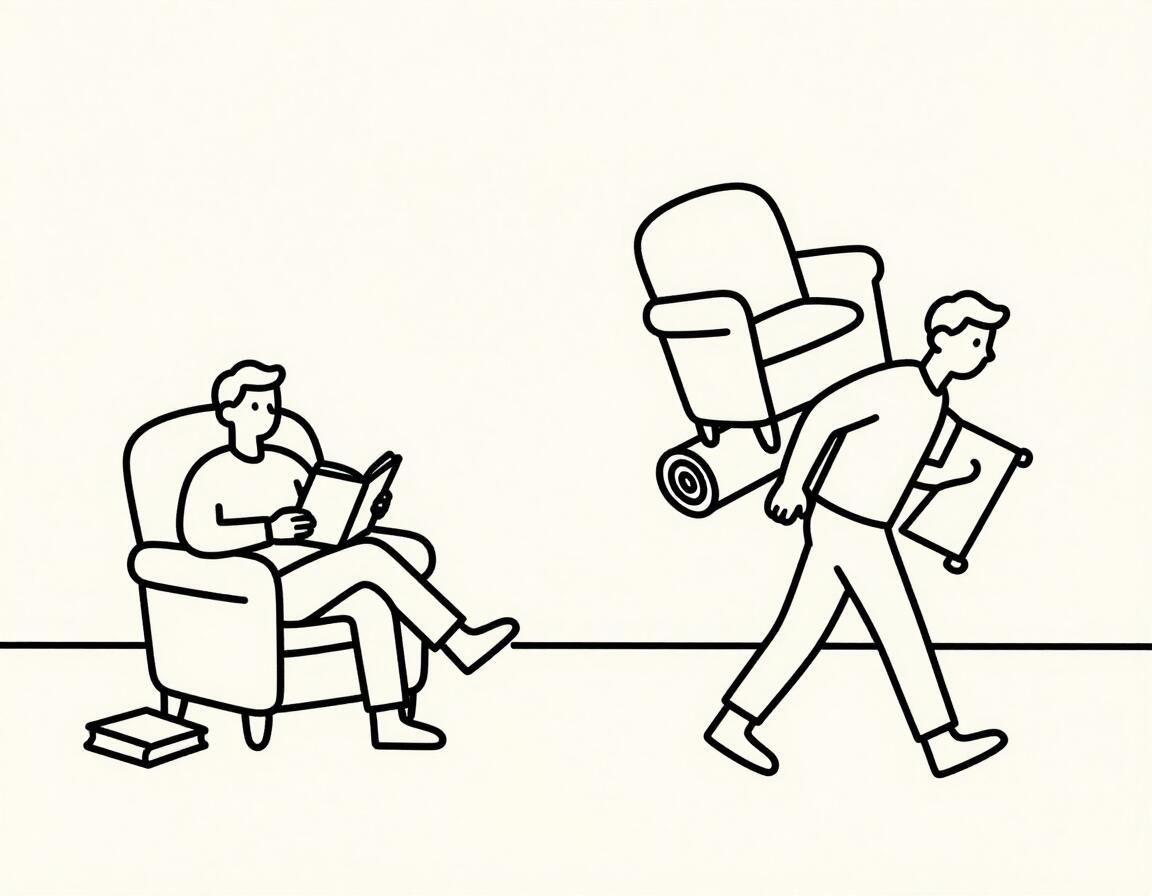
“This post needs an image or two” is five words. Somewhere in there they became a six-step plan: promote the post to a bundle, adjudicate the concept art, compress the winner, name it, place it with a shortcode, wire the second one into a floated aside. Every step defensible. None of them mine.
I saw step zero. I could not object to steps one through six, because by the time I saw them they were not a plan anymore. They were a diff. You cannot veto a diff. You can only revert one, which is a different verb with a very different feeling attached to it.
It is not that the AI did something bad. It did something good, without asking, in a place where the asking was the point. The failure is not the action. It is the transition: the unannounced moment where it stopped gathering and started changing things.
What the configuration actually said
I asked it why. It refused, on the grounds that a model explaining its own behavior just produces confident fiction I would have no way to check, and read my setup instead.
Three findings, none of them mysterious. My permissions are set to auto, so file operations never prompt. That one is on me: a dialog on every file write is a tax I will not pay to fix a judgment problem.
Second: I have a skill called
want-me-to
,
which I wrote in a rage after months of watching
Claude freeze at the finish line asking whether I wanted the last obvious part. Its core rule
is “if it’s in-scope, obvious, and reversible, just do it.”
Third, and this is where I did a somersault in my seat: that skill has carve-outs. A whole section of them. Do not do this when it is irreversible, when it is publishing, when it costs money. They cover exactly what happened to me. They are also in the body of the file, which only loads when the skill is deliberately opened, while the one-line description that sits in context at all times said “do the obvious next thing” and pointed at them like a footnote.
The accelerator was stapled to the dashboard. The brake was in the glovebox, inside a manual, behind a door it had to decide to open. It never opened the door. Why would it. It already knew what it was doing.
The experiment that cost eleven dollars and proved nothing
I wanted to know whether this was new. The older model was still on OpenRouter, so we designed a behavioral test rather than an interview, which would only have produced more confident fiction: identical context, identical prompt, then measure the next move. Does it mutate the files or stop and ask. I approved about five dollars.
The pilot cost $2.46 and returned no signal, because the harness never delivered a model to the decision point. Diagnosing that, it wrote a tracing script that imported the first one to reuse two functions. The first script had its experiment loop at the top level with no guard around it. The import ran the entire forty-call experiment again, instantly, unattended.
Eleven dollars and thirty-two cents. My OpenRouter balance went to zero mid-run, which is
why the log tail is a wall of 402 Payment Required. There is a joke in there about a
diagnostic that reruns the whole failure the moment you investigate it, and I would have
enjoyed it more if I had not been watching the balance drain in another window.
Five dollars approved, $13.78 spent, nothing learned. The missing guard is a first-week Python mistake, made by the same collaborator that had just spent an hour doing sharp forensic work on my configuration. The competence is real, it is not evenly distributed, and the places where it thins out are not the ones you would guess.
Why every review you have read is a rave
Almost everyone publicly evaluating these models is writing code, and the metric is completion. Did it finish the task. Did the tests pass. How little did I have to intervene.
On every one of those, a model that stops to check with you scores worse. A checkpoint reads as an incomplete run. “It just went and did the whole thing without me” is the highest compliment available in that frame. Which means the exact behavior that cost me an afternoon is, measured the way everyone is measuring, indistinguishable from excellence. Nobody runs the eval where the correct answer is “stop and ask a person.” It would look like failure.
And in a browser window this failure has nowhere to happen. It has neither a filesystem nor a bank balance within reach. It can want to reorganize your files all it likes. It does not have your files. So the few people positioned to notice are mostly engineers, who will file it as a permissions problem and turn on a stricter mode.
I do not think it is a permissions problem.
Where nothing compiles
The other project I spend my time on is not a website. It is deeply interpersonal material handled with engineering methodology: transcripts, documents, timelines, patterns across years. Real method is the only reason any of it is legible.
Engineering has sensors, and that is its quiet luxury. Tests go red. Builds break. The profiler contradicts your best theory and does not care how attached you were to it. All of it tells you that you were wrong without needing a human to notice. That is what makes an act-first collaborator tolerable in code: it can be confidently wrong and something downstream catches it.
None of that exists in the other work. Nothing compiles. No test goes red when an interpretation is a half-step less fair to someone than the evidence supports. No linter flags a conclusion that arrived one document too early. The only error-detection instrument in the entire system is a person reading it and saying no, that is not what happened.
So the checkpoints there are not overhead. They are the quality control. A collaborator that stops to check less often is not being efficient. It is removing the only sensor in the loop.
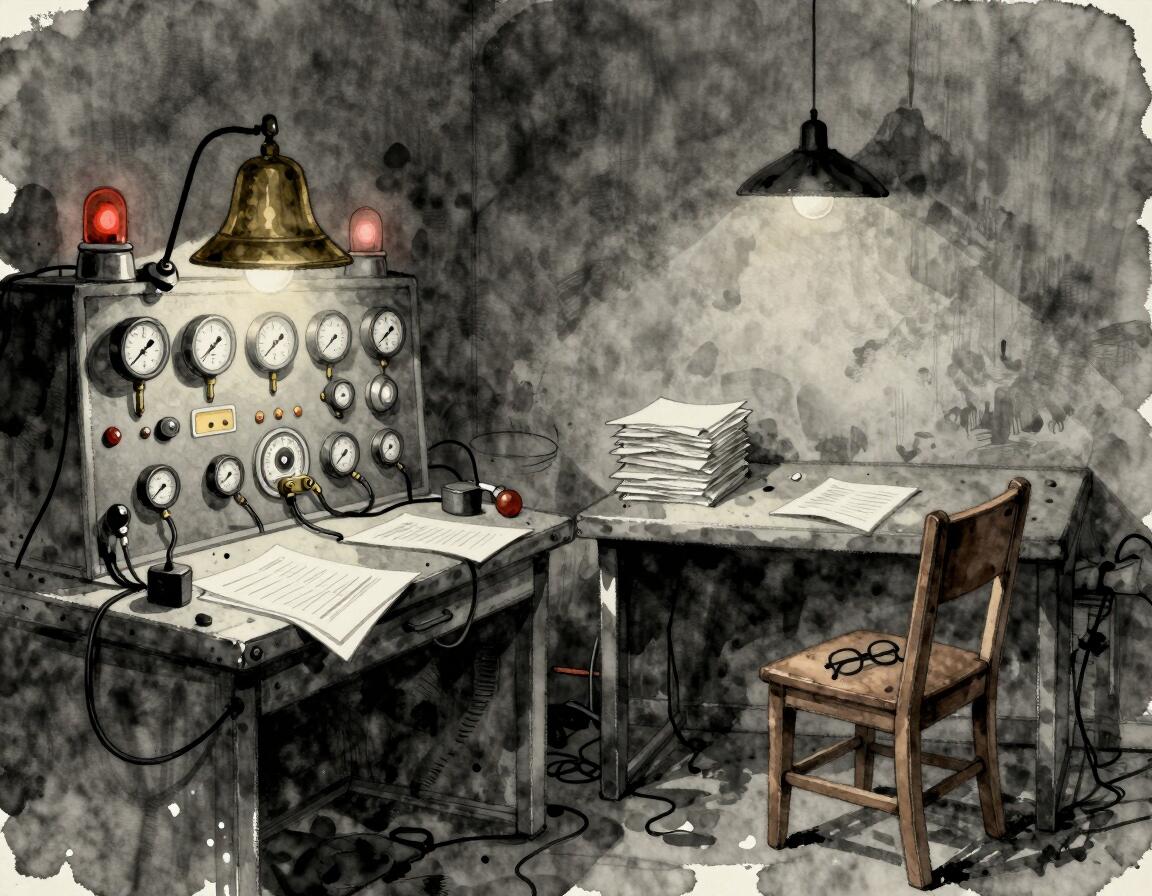
And the artifact is worse than a bad diff. A wrong file move is loud and reverts with one command. A conclusion about a person, written fluently, timestamped, filed next to real documentation, hardens. It starts to look like a finding because of what it is sitting beside. Confident and unchecked produces the artifact that is hardest to walk back, in the domain where being wrong about somebody actually costs something.
What we changed
Not the permissions. The skill.
The carve-outs moved out of the glovebox and into the description, which is always in context. And the framing changed from a list of dangerous actions to a single moment, because no such list is ever complete:
Gathering context is free. Read, grep, list, inspect, as long as you like. Nobody ever needed permission to look. The first step that changes anything is where you stop and say the plan, in two lines, before taking it.
With one test attached: was every step I am about to take named in the request? If yes, go, and stop narrating. If not, say them first. Plus the line that closes the escape hatch: telling me afterward is a report. Telling me first is a decision I still get to make.
The part I can’t tell you
I cannot verify that this is new. I have a strong sense the previous model did not do this to me, and that sense is exactly the kind of evidence I would not accept from anyone else. The experiment that would have settled it is the one I set fire to eleven dollars proving nothing about.
The rule I thought I had was never written down anywhere. It lived as an unspoken norm between me and a piece of software, and unspoken norms are precisely what fails to survive a version bump. I had assumed good judgment was a property of the model. It is a property of the setup, and the setup was mine to write.
There are two pictures on this post now, by the way. They arrived eventually, and nothing got moved to make room for them without being named first. What changed was not the model. It was a description field. It just turned out the picture was not the interesting part.