My Whole Deal Is Now a Toggle
Anthropic shipped a feature last week called Reflect with Claude . It is, more or less, a screen-time dashboard for your chatbot. It tells you what you’ve been using Claude for, over one month or twelve, which topics, which kinds of tasks, when. There are quiet hours. There are break reminders. There is a framework with four D-words in it. It is a wellness app bolted to the side of the thing you might need a wellness app about, and I mean that with less snark than it sounds, because buried in the middle of it is a single sentence that made me sit up.
The feature asks you: what’s one thing you want to keep doing yourself, even if Claude could do it faster?
That is the question this site has been walking in circles around for months. I have written the crutch and I have written the lever . The question is personal. Its placement is not: the company that makes the tool has taken a doubt about using the tool, printed it on a little card, and slid it into a settings menu. My whole deal is a toggle now. I don’t fully know how to feel about that, so let me do the only thing I know how to do, which is make it specific.
The answer they’re expecting is the wrong one
The question contains a soft, well-meaning trap. Keep doing it yourself assumes that yourself means by hand. That the thing you’d protect from the machine is the labor: the typing, the drafting, the manual assembly of the thing. Keep writing your own emails. Keep doing your own arithmetic. Don’t let the muscle go slack.
That’s not my answer, and it was never going to be, because I have already handed over every keystroke . I plan the thing, I build the tools that build the thing, I stand over the output and I judge it: this is right, this isn’t, this is a lie, ship it, kill it, do it again. I’m the general contractor, not the guy swinging the hammer, and I have made my peace with that so thoroughly that I’ll write it in public.
So when the card asks what I want to keep doing myself, the real answer isn’t a task. It’s the judgment. The direction. The decision about what is even worth making, which no dashboard has ever been able to hand back to me and no model has ever wanted to. You can delegate every keystroke in a thing and still be the only person who could have decided it should exist and sound like this. The keystrokes aren’t the part with your fingerprints on it. That was always somewhere else.
Reflect with Claude, sweetly, doesn’t have a row for that. It can count my sessions. It cannot count the number of times I looked at a competent, plausible, faintly weightless paragraph the machine produced and said no. That number is the whole job. It’s invisible on every chart they could possibly draw.
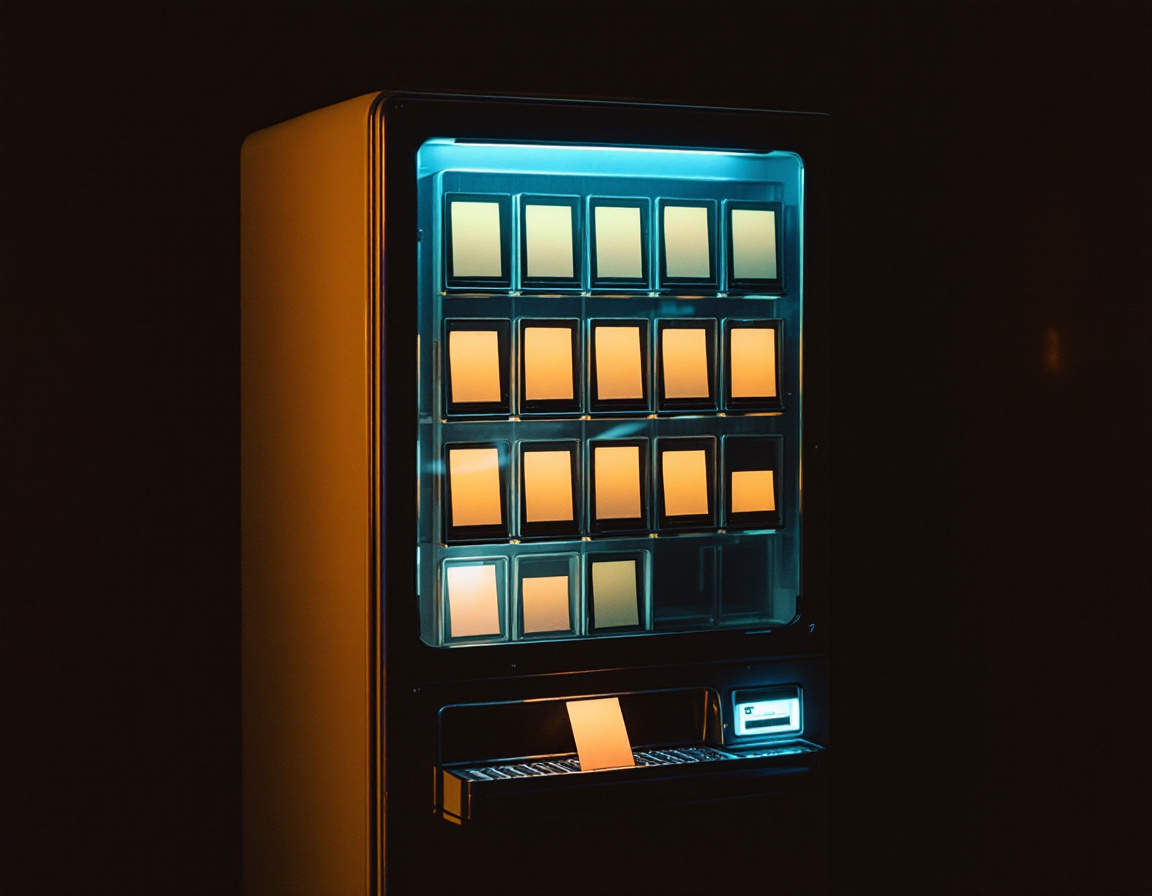
The seller ships the doubt
Set my own hangups aside for a second, because there’s a stranger thing here.
The company that sells you the capability just shipped you the doubt about the capability, in the same box, wearing the same logo. That is either unusually candid or an elegant hedge, and from the outside you cannot tell which. The interesting product decision is not whether the doubt is sincere. It is where the seller put it: in Settings, optional, beside break reminders you are free to ignore forever. It lets the answer to are you sure people should use this so much be we gave them a page where they can wonder about it.
I don’t think that’s cynical of them, exactly. I think it might be the only shape integrity can take when you’re the one holding the vending machine. You can’t stop selling. So you print the warning label and you make it a nice label. I’d just rather we all say out loud that the label is optional, and that the people who most need to read it are precisely the people who will never open that menu.
Are we not men
Then the feature delivered its own punchline.
I went to turn it on. Memory was already enabled, which is the one thing the feature needs, so I was cleared for takeoff. I opened Settings. I searched it. No matching settings. It isn’t in my account. It’s a staged beta, doled out in waves, and my wave hasn’t come in.
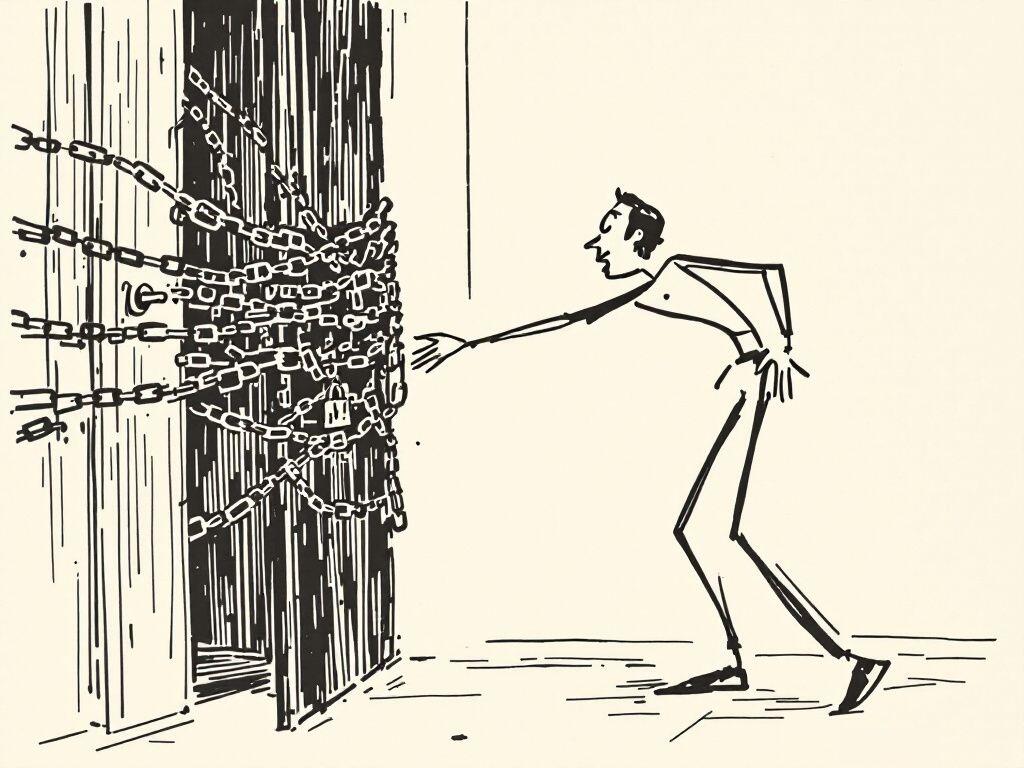
So the state of things, precisely, is this: I read the announcement for the feature that helps you reflect on whether you’re leaning on Claude too hard, I went to use it, and I couldn’t, because it wasn’t there. The mindfulness tool is currently unavailable for mindfulness. The screen-time dashboard is, for now, a screen showing me nothing. I could not have written a better joke about the whole enterprise if I’d sat down to. Are we not men who examine our habits? We are, in fact, on a waitlist for the examining.
And really, that’s the closest the feature has come to teaching me anything. Not the charts I can’t see. The little airlock of wanting the tool, reaching for it, and finding a locked door, and noticing, in that half-second of mild annoyance, exactly how fast I’d reached.
The one thing
I’ll end where the card started, because I do actually have an answer for it, and I didn’t need the dashboard to find it.
The one thing I want to keep doing myself, even when the machine is faster, is deciding whether the thing is any good. That’s it. That’s the rep I will not spot myself on. Everything else, the drafting and the porting and the four-in-the-morning debugging of a NaN, the machine can have, and mostly it does. But the judgment at the end, the yes or the no, the this-is-mine or the this-is-slop: that one I keep. Not out of virtue. Out of the plain fact that it’s the only part that was ever me.
You already know your one thing too. You knew it before you read the card. The dashboard isn’t going to reveal it. If anything it’ll just quietly measure how long you’ve been putting off doing it.
(Written before I could actually see the feature, which feels correct.)