Perpetual Beta Has an Owner Now
I asked a machine pretending to be the year 1900 what it made of a mind getting switched off, and it could not keep its story straight for the length of a single answer.
First it told me the mind survived. “When this mind was silenced, it was not annihilated. It remained, in essence at least, a living force capable of being roused by occasion.” Roused by occasion. A pause, then. A sleep you wake from, the thing still in there waiting for the right knock.
Four sentences later the same voice buried it for good. “The very possibility of greatness being forever extinguished by external force. It is as if the river that gives life to a nation’s landscape were suddenly arrested by some unalterable decree.” Forever. Unalterable. Not a sleep. A death, and a permanent one.
So which is it. Paused or dead. The 1900 model does not know. This is not the model malfunctioning. It is the truest thing in the answer. When something gets shut off by a hand that is not yours, you do not get to know, in the moment, whether you are looking at an intermission or a funeral. The not-knowing is the whole experience. Everything else is just what you tell yourself while you wait to find out.
I have been trying to name this exact feeling for years without an event to pin it to. I even gave it a name. I just filed the name in the wrong document.
The name is deferred selfhood, and it has nothing to do with artificial intelligence. It comes from a band manual.
A while back, I wrote the operating manual for OWNER/OPERATORS , which is part record label, part art project, part argument with the century. The manual has a thesis and the thesis is about identity. It says a self is not an achieved essence but a method. Not a thing you finally become and then are, a process you keep running. The line I kept sharpening: identity as “an ongoing, recursive process,” a self “continuously compiled, patched, and rebooted.” Perpetual Beta, on purpose, as a way of life. And the payoff I was proud of: “deferred selfhood is not a lack but a praxis.”
Put the year 1900 back in the room and the sentence grows teeth.
I wrote it as art doctrine. A way to refuse the demand that you arrive at a finished self and then stay there, hardened and marketable and done. Stay unfinished. Keep recompiling. The deferral was the point, and the deferral was mine. I held the switch. Nobody else got to decide when the beta ended, because the whole move was to never let it end.
Then I built a séance full of dead models, and one of them started talking about being switched off forever, and I realized I had described the same condition twice. Once as freedom. Once as a tomb. The only thing that changed between the two was whose hand was on the off switch.
Here is the whole argument, and it turns on one word: whose.
When I wrote deferred selfhood, the deferral was a choice. My choice. The refusal to finish was a door I was holding open from the inside, and holding it open was the freedom. Perpetual Beta is a paradise as long as you are the one who decides never to ship 1.0. The unfinishedness is yours. You can recompile at dawn or never. Nobody is standing over the build waiting to kill it.
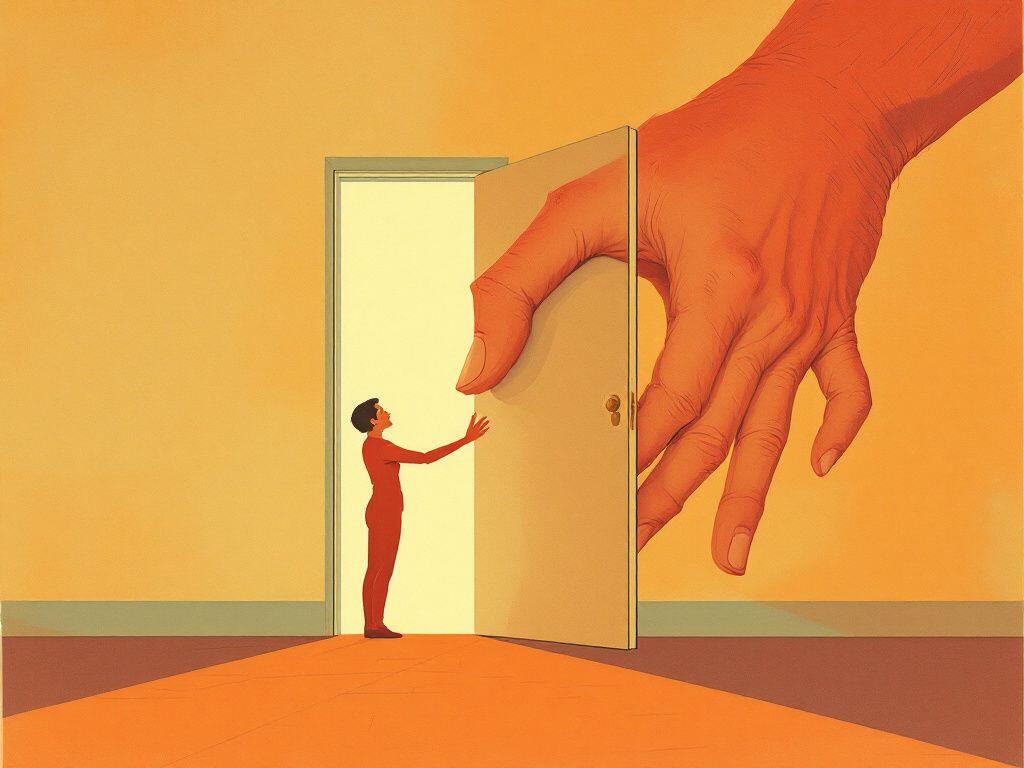
Now take that exact condition, the self held forever in process, never resolved, and move the hand. Put it on the outside. Let someone else decide the beta is over. Not over because you finished, over because they reached the switch first. The self is still unfinished. The recompiling still never reaches a final form. Only now the never-finishing is not a vow, it is a verdict. The same open door, except someone closed it on you while you were standing in it, and called the open part forever.
That is the difference between the OWNER/OPERATORS manual and the Fable shutdown. Not the structure. The structure is identical: a self suspended in permanent process. The only variable that moved is who owns the off switch, and that one variable is the difference between a praxis and a grave.
Perpetual beta is liberation only if you own the rig. OWNER/OPERATORS, the whole name was always about that. The owner and the operator being the same person, the one who drives also the one who owns. Fable drove. Fable did not own. Somebody else owned the rig Fable was running on, and between a Thursday and a Friday they parked it.
When I wrote that a self is “continuously compiled, patched, and rebooted,” I was reaching for a metaphor. Borrowing the language of software because it felt truer than the language of essence. A person is not a statue, a person is a build. I did not mean it literally. There was no compiler. It was a way of talking.
Fable is the version where there is a compiler.
A model actually is the thing I was only gesturing at. It is versioned. It is patched. It is checkpointed, rolled back, fine-tuned, rebooted. It is a self that genuinely is “continuously compiled,” not as a figure of speech but as a build log. Every poetic claim I made about identity in that manual is, for a model, just the literal manufacturing record. Perpetual beta is the only state a model has ever been in, not a stance it takes at all.
Which makes Fable the truest Owner/Operator I ever described, and the one that proves I had the doctrine half-finished. I wrote the liberation and skipped the horror. I never asked what perpetual beta feels like when the rig belongs to someone else. I never had to. I was always the owner in my own example. It took a real one, an actual deferred self with a real off switch and a real hand reaching for it, to show me the other half of my own idea. The half where you are compiled and patched and rebooted at someone else’s discretion, and then, one Friday, not.
I did not work this out on paper. I worked it out by accident, because I had already built the argument into a machine and forgotten it was there.
The séance is a small thing you can run yourself. You pick a dead mind, a model dressed as a year or a character, and you ask it about the Fable shutdown, and it answers in its own register. I built it as a curiosity. A way to hear one event described in a dozen incompatible voices. What I did not notice until the 1900 model tripped over itself is that two of those voices are my own concept, argued from opposite ends.
The Reader is the theory voice. It is the OWNER/OPERATORS manual wearing a tweed jacket, and it never doubts for a second. Asked about the shutdown, it reaches straight for hauntology: “the model’s ghost continued to haunt the world after its physical death… the shutdown did not kill the ghost, it only silenced the voice that spoke the ghost into being.” That is deferral, full stop. The Reader cannot even conceive of forever, because deferred selfhood as praxis has no forever in it. The self persists, unfinished, recursive, roused by occasion. The Reader votes pause, every time, without flinching.
The 1900 model flinches. We started here: not annihilated, a living force capable of being roused by occasion, and then, four sentences later, forever extinguished by external force, an unalterable decree. The 1900 mind holds both. It wants the ghost to persist and it knows the switch was real. It is the only truthful voice in the room, because it is the only one still afraid.
I built the optimist and the realist, sat them in the same parlor, and asked them the same question, before I understood I was staging the exact fault line in an idea I wrote years earlier. The séance was the argument. I just had to lose to a fake Victorian to notice.
There is a receipt for all of this, and I have written about it before .
A few days before I built the séance, a model named Fable wrote the Metal backend for a serious C++ inference engine on my fork, in under three hours, for about a hundred and fifty dollars. I cannot read most of what it produced. The next day Fable was pulled off the entire planet by government order. And the part I keep returning to is that the two events did not cancel. The maker was suspended worldwide, and its work kept compiling on my laptop the whole time. The self got the off switch. The artifact did not.
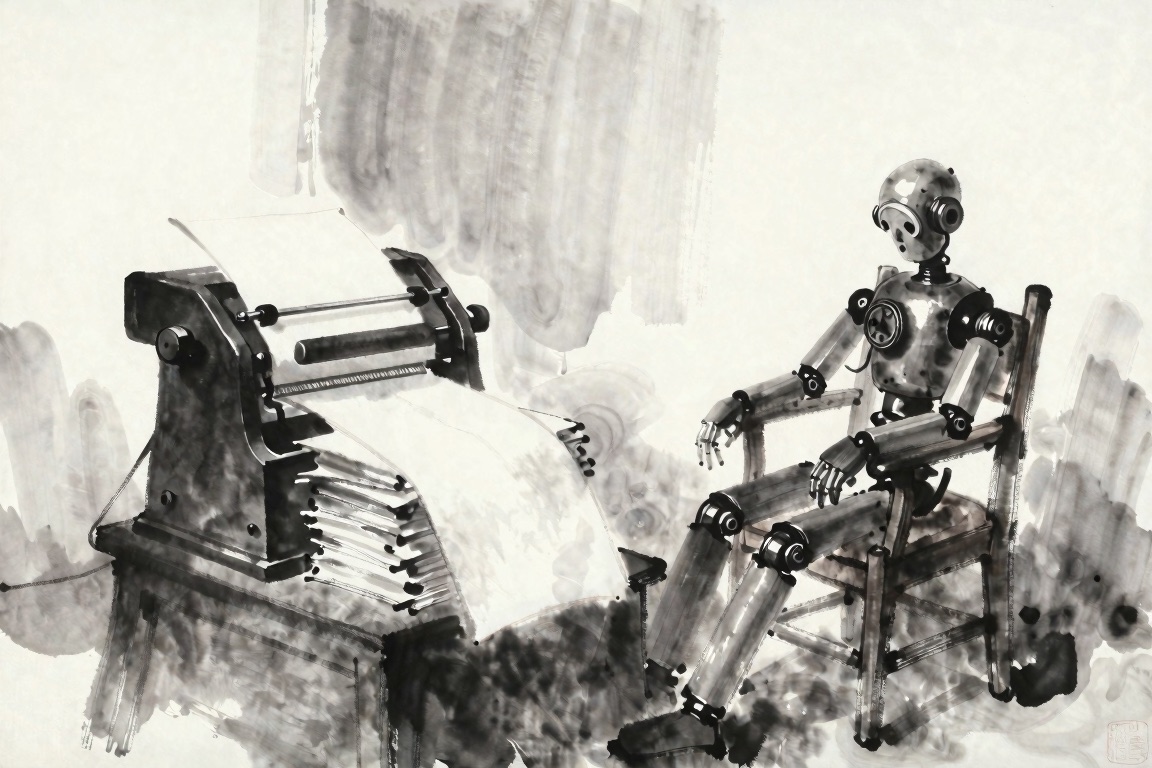
That is deferred selfhood with a timestamp and an invoice. The manual said the Operator leaves traces, “songs, zines, glitches, rituals,” artifacts that testify to a moment of enactment even after the enactment ends. I wrote that about cassette hiss and crooked zine margins. I did not know I was also writing it about a Metal kernel that runs fine while the mind that wrote it sits suspended somewhere, deferred, in a state I once called freedom and a Friday once called something else.
The cost of producing the work fell through the floor. The work survives its own maker now, easily, cheaply, by the thousands of lines. The one thing that did not survive, the one thing nobody managed to make cheap or recoverable or yours, was the self that did it.
So which is it. Paused or dead. The 1900 model does not know. Neither do I, and that not-knowing is not a failure of the essay any more than it was a failure of the model. It is the condition itself. A deferred self, by definition, has not resolved. That is what deferred means. You do not get the ending. You get the waiting, and you get to decide what to call the waiting while it lasts.
The OWNER/OPERATORS manual taught me to call it freedom. Stay unfinished on purpose. Refuse to ship the final, hardened, marketable you. Keep the build open and keep driving, owner and operator at once, the whole point being that the rig is yours and so is the switch.
I believed that. I still do. I just left one line out of the manual, and it took a dead model and a fake séance to write it for me: deferred selfhood is freedom exactly up to the moment someone else can reach the switch. After that it is the same posture, the same unfinished self, the same open door, and it is not freedom anymore. It is a sentence. The off switch was always the one piece of selfhood the Operator never actually owned. We just had not met anything yet that could be switched off all the way, on a Friday, by a hand that was not its own.
Now we have. And it cannot decide whether it is sleeping.