Machine learning
Systems that learn patterns from data instead of hand-written rules.
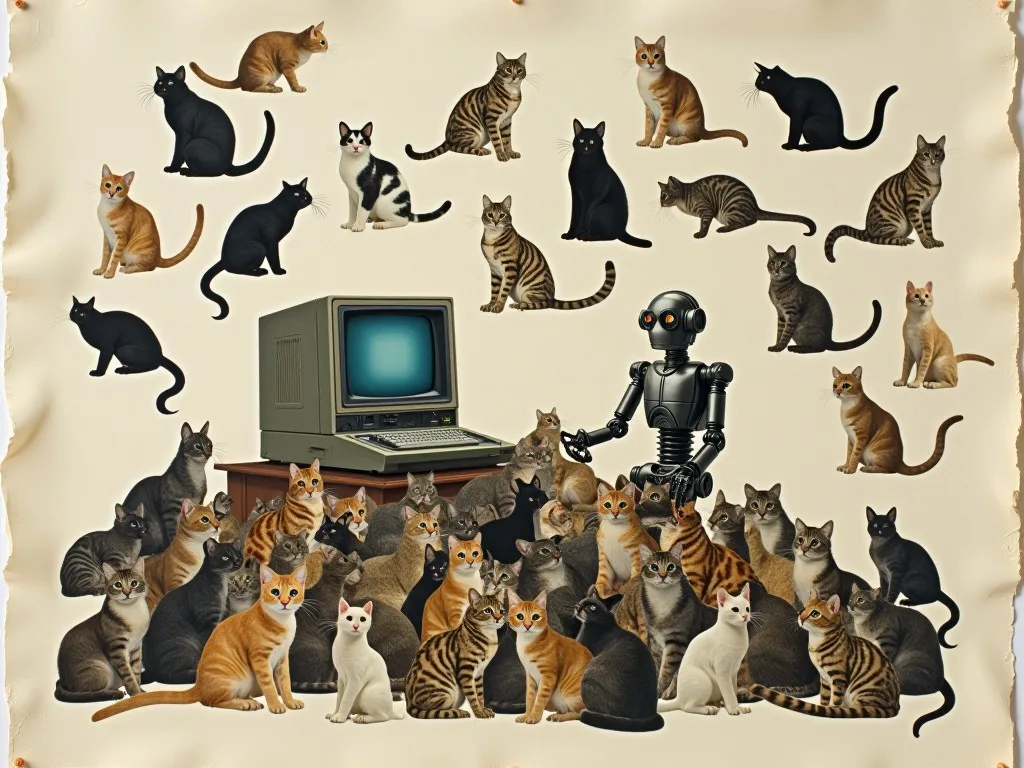
Machine learning (ML) is the branch of AI where a system learns patterns from data instead of following step-by-step rules a programmer wrote out. Rather than code the logic directly, you set up a model with adjustable parameters (its internal dials) and a way to score how wrong it is (a loss function), then run training: show it examples, measure the error, and nudge the dials to shrink that error, over and over, until the model works on examples it hasn’t seen before. Using a trained model on new input is called inference.
The classic split is by what the data looks like: supervised learning trains on labeled examples (input → correct answer), unsupervised learning finds structure in unlabeled data (grouping things, building latent space embeddings), and reinforcement learning trains an agent through rewards as it acts in some environment.
Deep learning is the modern flavor that stacks many layers of tensor math into neural networks (the transformer and GAN are deep-learning designs), and it’s what powers most of what people now call “AI.” The constant hazard everywhere in ML is generalization: a model that aces its practice data but flops on new data has overfit, which is why you keep an eye on validation loss .