Why this exists
I started this as a glossary for myself. I kept running into the same words, quantization, latent space, tensor - nodding along, and then quietly looking them up again an hour later. So I wrote them down in plain language.
Then the definitions started leaking into everything else.
You can’t have a sane relationship with something you refuse to understand.
I got tired of bluffing
Most writing about AI begins one floor above where I was standing. It explains why a quantized checkpoint runs faster by using three other words I also have to look up. It assumes that because I can operate the tool, I understand the machine. I often did not.
So the rule here is simple: if I cannot explain a term without hiding the hard part behind another term, I am not done. Plain language is not baby language. It is the test that tells me whether I understand the thing or merely recognize its vocabulary.
That test turned out to be useful well beyond a glossary. Once I understood what a LoRA could and could not change, I could run an experiment about where a model’s refusals lived. Once I understood unified memory , I could see the one fact an entire Metal backend might hinge on. The definitions became experiments, and the experiments became posts.
The scary part is rarely the cinematic part
I’m not here to tell anyone to relax. Plenty of the fear around AI is earned: the disruption to how people make a living, the flood of synthetic information nobody can verify, the concentration of enormous power in a handful of companies. But Jason Pargin has a great bit about what science fiction missed. It called the video calls and the pocket computers, and almost nobody imagined what the smartphone would actually do to us: the attention economy, the quiet collapse of privacy, the rewiring of how we talk and think. The hardware was easy to predict. The transformation was invisible until we were already living inside it.
AI looks the same to me. We spend our energy on the cinematic fears while the boring, structural, everywhere-at-once changes happen somewhere we’re mostly not looking, and they’re hard to see precisely because they’re everywhere.
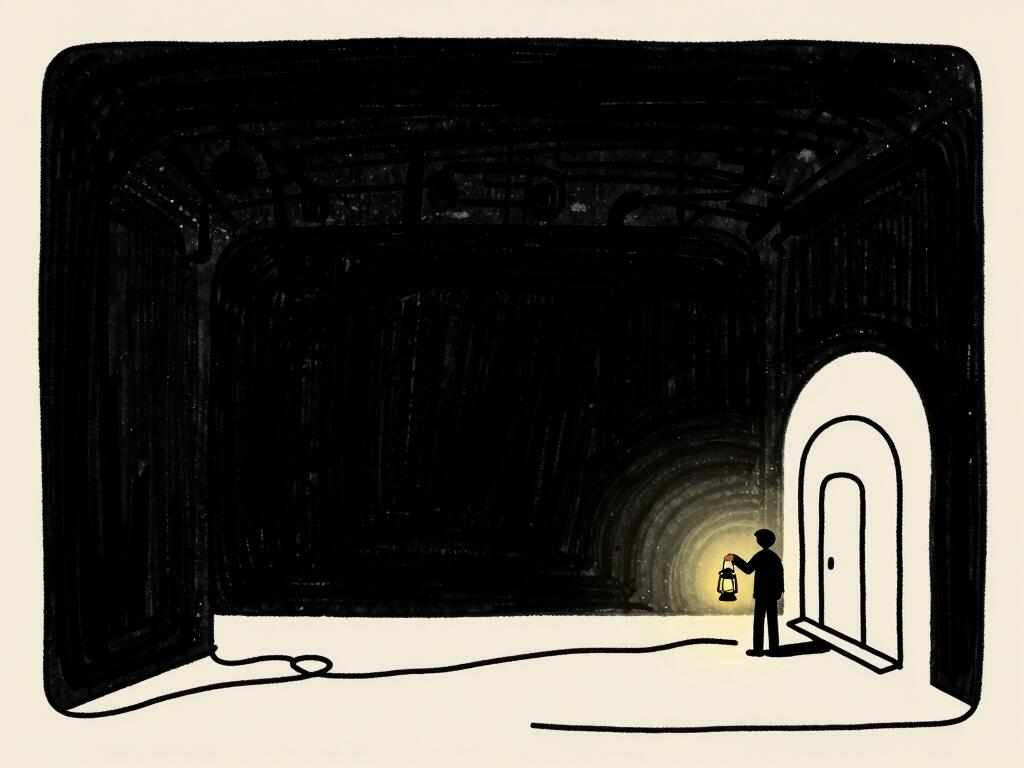
The interesting part is usually one layer down
The loud questions are irresistible: Is it conscious? Will it take the jobs? Is it safe? I keep getting more use from the smaller questions underneath them. Which part of this result came from the model and which part came from the wrapper? What changed when the adapter came off? Why did the bot agree with me? Who owns the off switch?
I’m not trying to tell you AI is fine, and I’m not trying to tell you to panic. I’m trying to make the thing legible, because understanding is the prerequisite for everything else, whether that ends up being fear or hope or, more likely, some uneasy mix of both.
That’s all this site is. A working notebook. A glossary, some notes, the occasional deep dive. I don’t wait until I understand everything; that would be a very quiet website. I learn enough to ask a better question, try the thing, write down what happened, and leave the machinery showing. I’m still figuring it out myself. This is me doing that out loud.